
August 8, 2026 · BB Team
How much does a Tokyo Airbnb actually earn? Real numbers from a licensed operator (2026)
#minpaku #owners #tokyo #earnings
“How much would my property earn on Airbnb?”
It’s the first question every owner asks us, and most answers you’ll find online are either theoretical market averages or marketing numbers nobody can check. So here are real figures from properties we manage in Tokyo — published with our owners’ arrangements in mind, drawn from owner reports and Airbnb dashboards.
For context: BB is a licensed residential lodging manager (国土交通大臣(02)第F-00388号, registered June 2018), operating in Tokyo since 2015 as a current Airbnb Superhost with ★4.73 across 1,286 reviews.
Example 1 — an apartment portfolio: ¥23.6M a year across 7 units
Our largest single engagement is 7 apartments in the Ikebukuro area, managed end-to-end for one owner. In 2024 the portfolio earned ¥23.6M in annual revenue, with 1,242 nights booked at an average stay of 4 nights, running roughly 18% above neighborhood occupancy comps — and holding Airbnb Superhost status.
That’s an average of ¥3.4M per unit per year for standard Tokyo apartments. The lift over comps comes from dynamic pricing and review velocity, not from the units being special.
Example 2 — a premium whole-house rental: ¥49,800 on peak nights
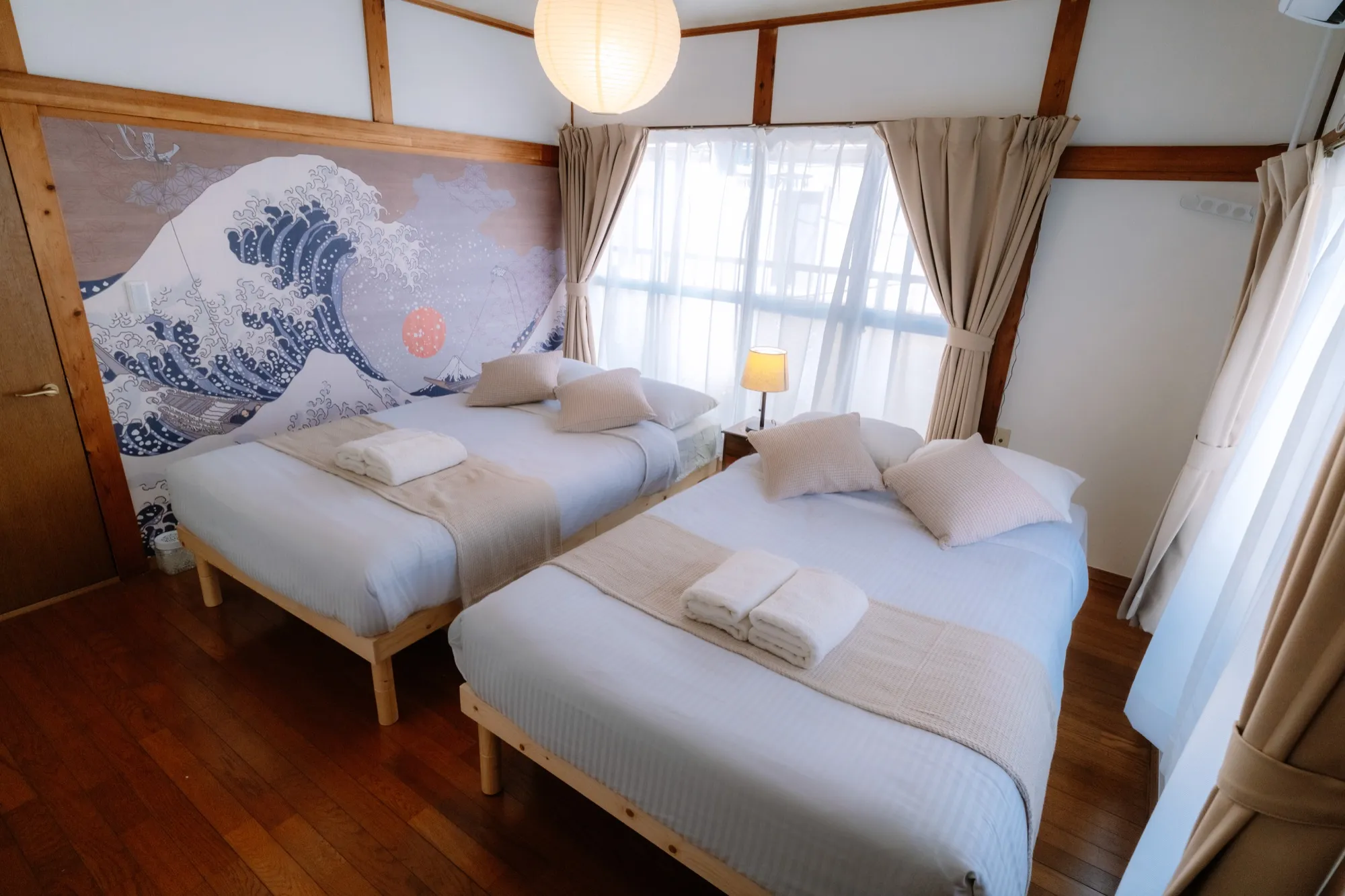
Kimiko Jujo House is a 72 sqm, 3LDK house in Kita-ku that sleeps 8, two minutes from the Jujo Ginza shotengai. We designed it as a product — ukiyo-e murals, a projector — rather than just listing a house. Launched December 2025, it booked New Year’s Eve at ¥49,800 a night.
The lesson from this one: in Tokyo, product design moves your nightly rate far more than square meters do. A memorable house books peak dates at rates a generic one never sees.
Example 3 — a large detached house: about ¥1.8M a quarter
A 132 sqm detached house in Sumida-ku near Tokyo Skytree runs at an ADR of ¥43,000 and produces around ¥1.8M per quarter, targeted at family and group bookings, with long-stay discounts used to keep occupancy high.
Large houses are a distinct game: fewer, bigger bookings, and a guest segment (families, groups) that plans further ahead and stays longer.
What actually drives the number
Across the portfolio, four things explain most of the variance:
- The licensing regime, before anything else. A standard minpaku registration caps you at 180 hosted nights per year. At a ¥43,000 ADR, the difference between operating 180 nights and operating year-round (under a 旅館業 hotel license or 特区民泊) is the single biggest lever on annual revenue. We have filed under all three regimes and advise which fits before an owner commits.
- Product, not floor area. The Jujo house out-earns larger, plainer properties on peak dates because guests choose it for what it is, not how big it is.
- Pricing discipline. Dynamic pricing tuned to seasons and events is where the +18% over comps comes from. Set-and-forget rates quietly give that margin away.
- Reviews compound. Occupancy follows rating and review count. This is slow to build and easy to destroy — which is why guest response speed and cleaning consistency matter more than any growth tactic.
The honest cost side
Revenue isn’t profit. From gross revenue, expect management fees (ours are a transparent 15–28% of revenue depending on scope), cleaning costs per turnover, utilities, consumables, and OTA commissions. What remains varies a lot by property type — a portfolio apartment and a large house have very different cost shapes — so we walk owners through a property-specific estimate rather than promising a universal “yield.”
How to estimate your property
Tell us where the property is and how you’d like to use it, and we’ll tell you honestly what it can do under Tokyo’s rules — including when the answer is “this property doesn’t suit short-term rental.”
- Airbnb property management in Tokyo — what we do and what it costs
- Our case studies in detail
- Message us on Facebook Messenger — we reply in English, Japanese, or Vietnamese.
Figures above are from properties under BB management, as reported in owner reports and Airbnb dashboards for 2024–2026. Every property is different; past performance of these properties doesn’t guarantee yours.